Tesla Delays Unsupervised FSD for Customer Cars to Q2 2027, Limiting Use to Robotaxi Zones
Tesla’s AI chief clarified that the upcoming autonomous capability will allow owners to add their vehicles to the company's managed fleet, rather than providing unrestricted self-driving for personal use.
By Isabella Morales ·
Tesla has set a new timeline for its most anticipated autonomous driving feature, stating that unsupervised Full Self-Driving (FSD) for customer-owned vehicles will be available in the second quarter of 2027. During the company’s Q3 2026 earnings call, AI head Ashok Elluswamy provided this date in response to a question that had garnered support from approximately 1.1 million shares. While the announcement marks another milestone in a decade-long series of promises, the specific scope of the release represents a significant shift in how the technology will be deployed for individual owners.
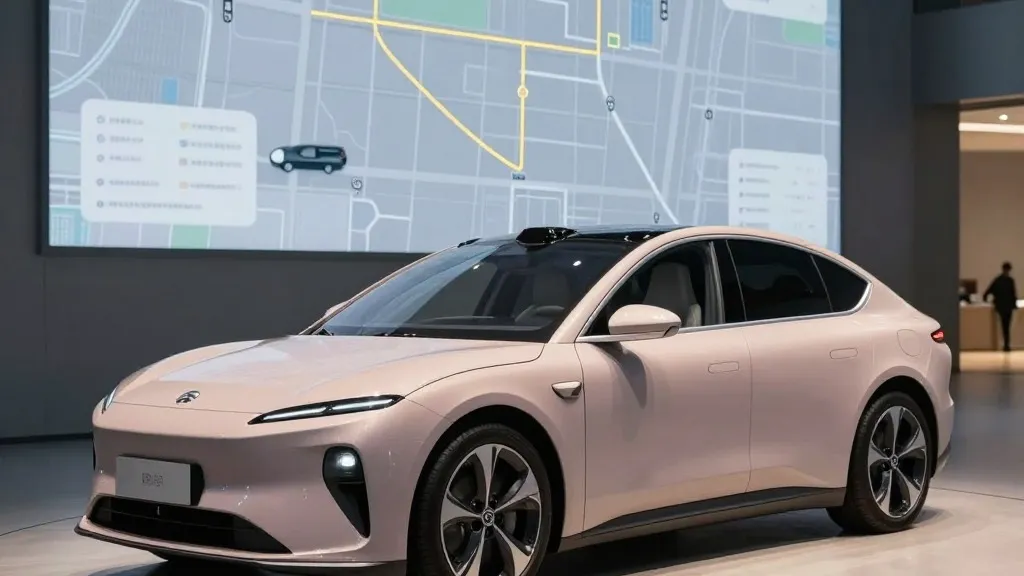
The core of the update is a change in operational model. Elluswamy described the Q2 2027 rollout not as a software update that allows owners to drive themselves anywhere unsupervised, but as a mechanism for owners to integrate their personal vehicles into Tesla’s existing Robotaxi fleet. In this scenario, the vehicle operates under Tesla’s management and only drives itself autonomously within the specific geofenced areas where the company’s Robotaxi service is already active. This means the autonomous capability is tied to the company’s commercial operations rather than being a universal feature of the car.
Currently, the geographic footprint for this technology is limited. Tesla’s Robotaxi service operates in six US metropolitan areas, but the serviceable zones within these cities remain relatively small. For instance, in Miami, the operational area covers primarily West Miami and a corridor extending toward Doral and Sweetwater. Similar small geofences were established in Orlando and Tampa in July. Within these zones, the service is designed for low-speed routes, generally avoiding highways and complex urban environments. Notably, in the Bay Area, the service is not fully unsupervised due to California regulations that require a safety driver in every vehicle because Tesla has not yet released the necessary data to the California DMV to exceed Level 2 autonomy requirements.
The scale of the current Robotaxi fleet also provides context for the upcoming customer integration. Tesla reported that its Robotaxi program reached nearly 2 million cumulative unsupervised miles by the end of Q3 2026, a month after the Cybercab was added to the Austin fleet. However, third-party tracking data from this spring indicated that the number of fully driverless Teslas on the road was in the dozens, a figure significantly lower than the hundreds of thousands previously discussed by CEO Elon Musk. Competitor Waymo has already established a presence in both Orlando and Tampa and has accumulated over 3 million miles of driving data.
This new timeline and scope contrast with the marketing messages delivered to FSD buyers over the past several years. The long-standing pitch suggested that a software update would eventually enable the car to drive itself anywhere. In July 2025, Musk told investors that unsupervised FSD would be available for personal use in certain geographies by the end of that year. A year prior to that, he had expressed skepticism that unsupervised self-driving would not be available the following year. Additionally, owners of the HW3 hardware have been informed that their vehicles cannot run unsupervised FSD, with no clear upgrade path provided.
The shift to Q2 2027 and the restriction to Robotaxi zones suggests a more conservative approach to deployment. The product is now defined by specific operational terms: the car joins Tesla’s fleet, operates within Tesla-controlled zones, and follows Tesla’s operational guidelines. This excludes use cases such as highway road trips or cross-town commutes outside of designated service areas. The announcement underscores that the technology is currently limited by the infrastructure and regulatory approvals Tesla has secured for its commercial service.
Elluswamy identified safety as the primary bottleneck delaying broader unsupervised deployment. He noted that Tesla limits its operations to low-speed roads and simpler environments to manage risk. While he expressed a belief that these safety issues will be resolved by next year, he acknowledged uncertainty regarding the exact timeline. The reliance on the Robotaxi network for customer vehicles indicates that Tesla is leveraging its existing operational framework to introduce autonomy to individual owners, rather than releasing a standalone consumer feature.
For shareholders and potential buyers, the Q2 2027 date represents the latest iteration of Tesla’s long-term roadmap. The integration of customer cars into the Robotaxi fleet may provide a near-term revenue stream and data collection opportunity, while the broader promise of ubiquitous self-driving remains on hold. The current deployment strategy prioritizes controlled environments and established commercial zones, reflecting a cautious approach to scaling autonomous technology in the face of regulatory and safety challenges.
Source: Electrek